
Image © Quark Studio Architects
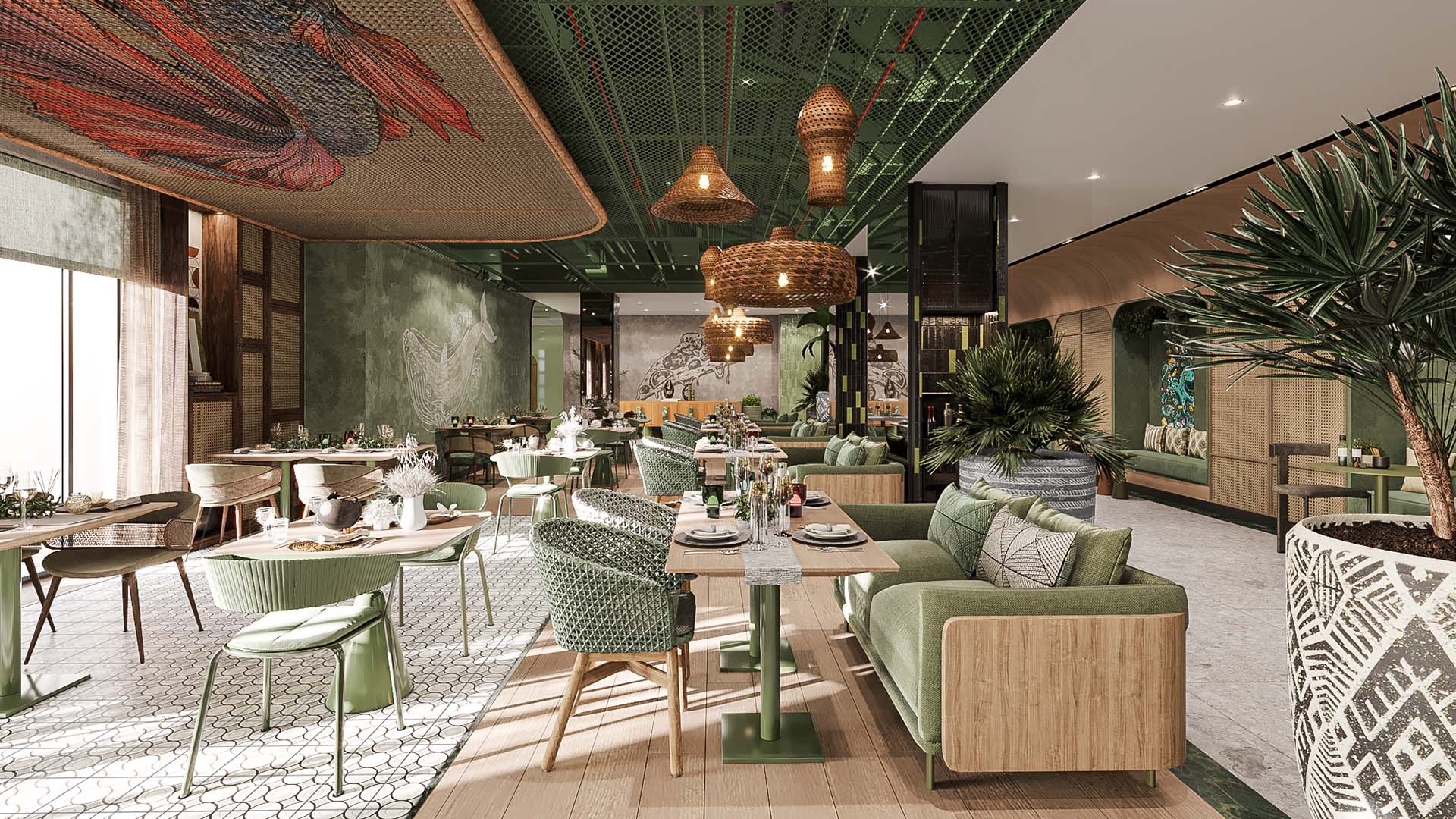
Image © Quark Studio Architects
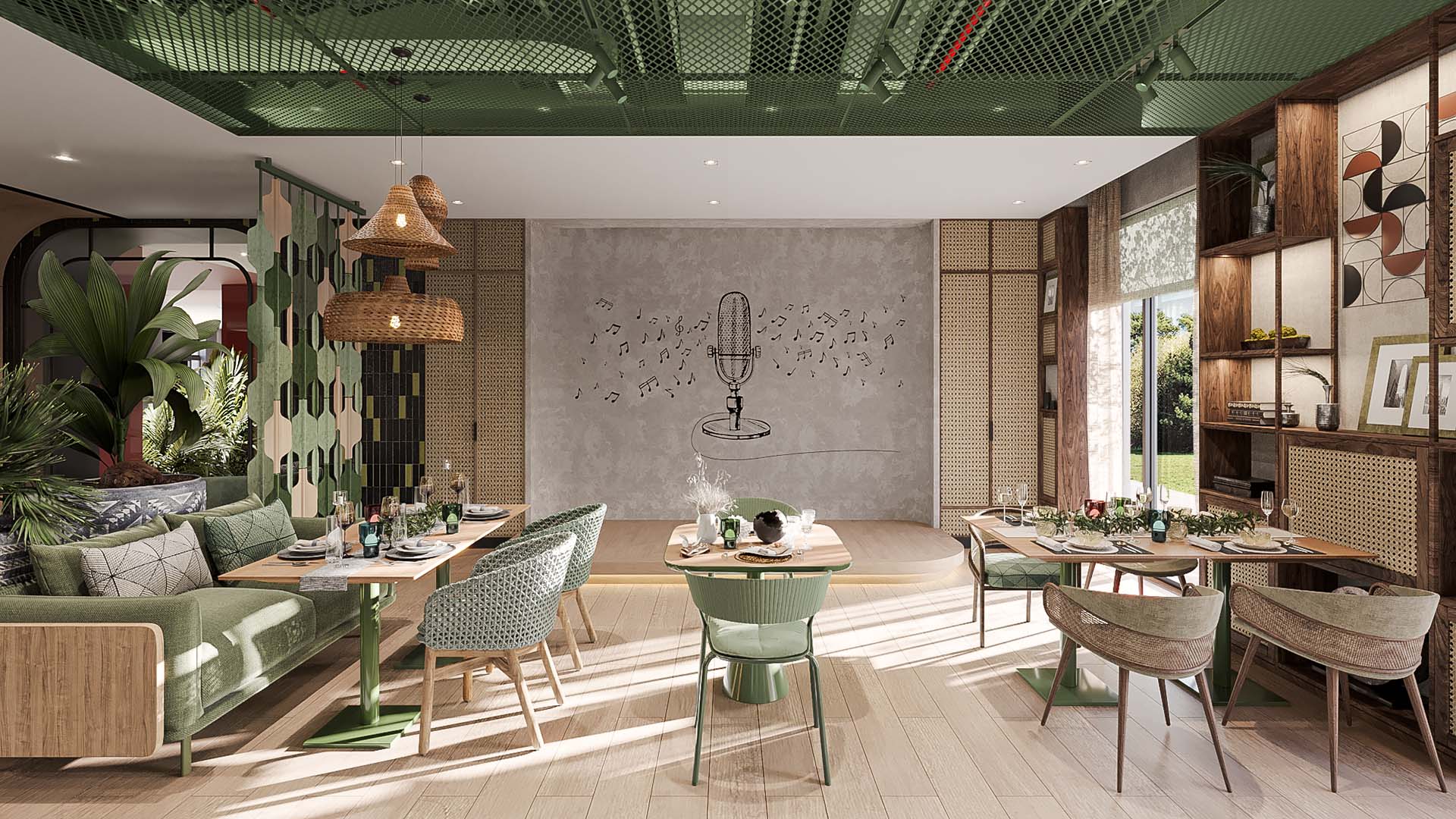
Image © Quark Studio Architects
ADD Restaurant in Intercity Hotel
Tashkent, UZB
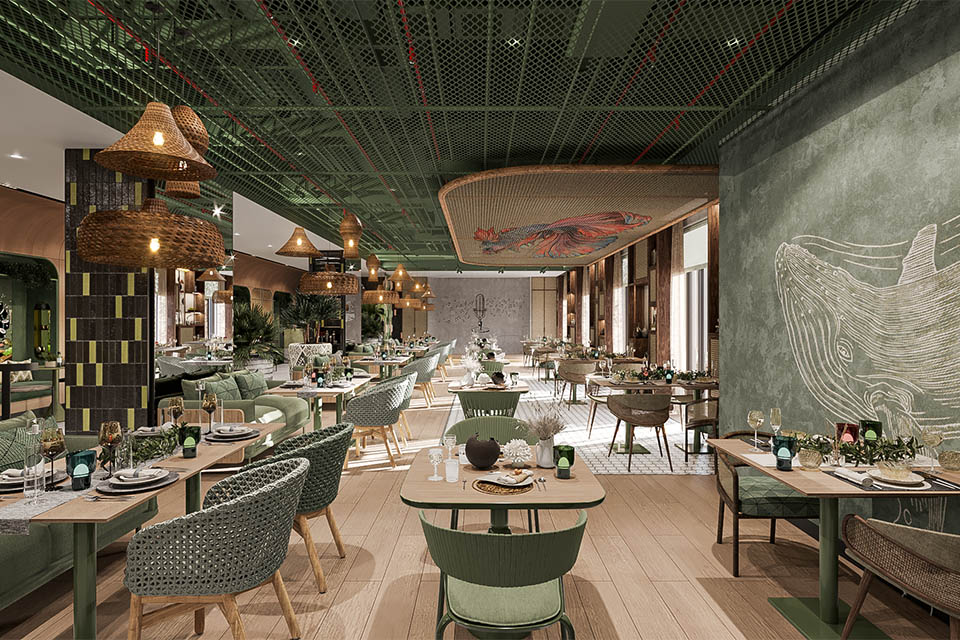
The ADD Restaurant in the Intercity Hotel, a 355 square meter dining facility located in Tashkent, Uzbekistan, is the subject of this interior design project. The design establishes a distinctive atmosphere by merging elements of biophilic design with a contemporary material palette and strategic spatial zoning. The goal was to create a flexible, all-day dining environment that transitions seamlessly between breakfast service, casual lunch, and an evening social hub, all while maintaining a strong, unified design identity centered on natural tones and textural depth.
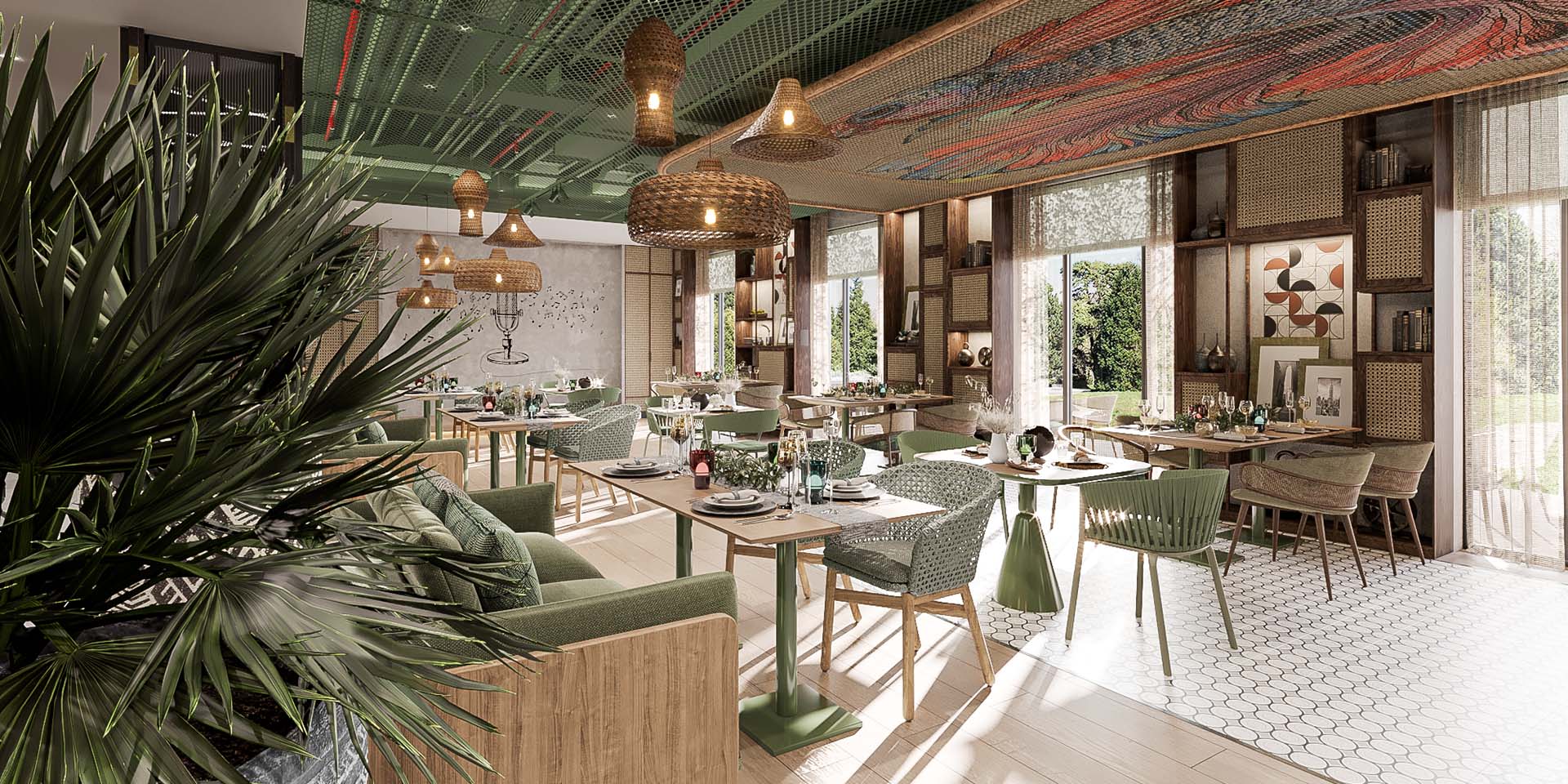
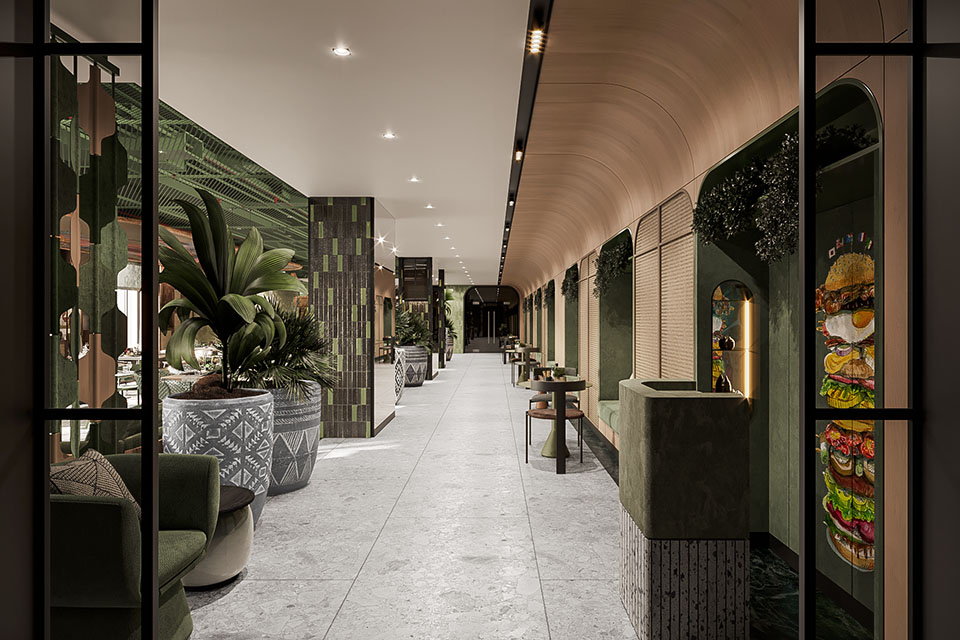
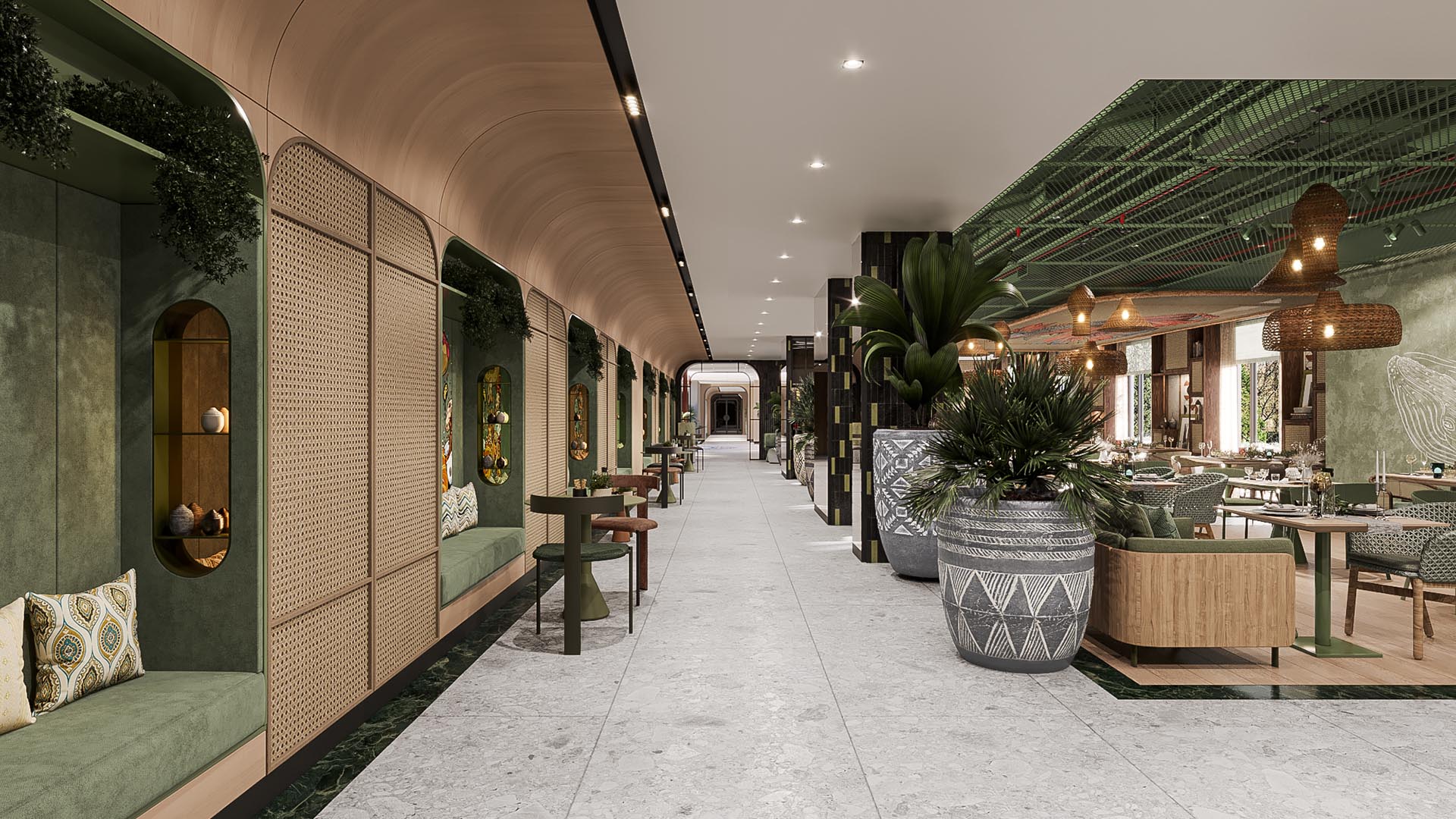
The restaurant’s spatial layout is defined by a longitudinal axis running parallel to a significant wall feature, which serves to organize the flow of movement and delineate functional zones. The total area is partitioned into distinct dining environments; a central, flexible main seating area, a dynamic buffet and service station, and an evocative hallway/lounge zone characterized by deep, rhythmic booths. The main dining space is open and voluminous, anchored by an integrated performance area (suggested by the microphone graphic), which introduces an element of entertainment and flexibility for various events. The architectural treatment of the long corridor—with its curved, light-toned ceiling canopy and recessed, upholstered seating nooks—creates a sense of enclosure and intimacy, offering an alternative experience to the open main room. This deliberate variance in spatial scale enhances the functional diversity of the restaurant.
The material selection is instrumental in establishing the project’s biophilic aesthetic. The palette is dominated by natural, textural materials and a strong focus on shades of green. Key materials include:
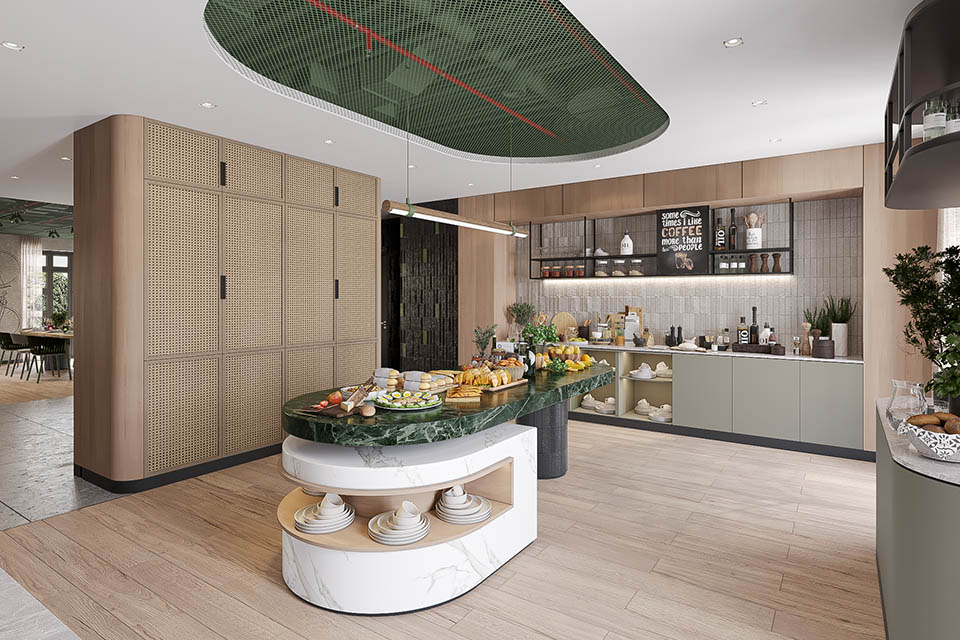
- Rattan and Cane Weave: Used extensively for wall paneling, cabinetry, and sections of the furniture. This material provides a fine, intricate texture and a grounding, earthy hue.
- Timber: Light-toned, natural wood is used for the flooring, table tops, and structural furniture frames, contributing warmth and domestic scale.
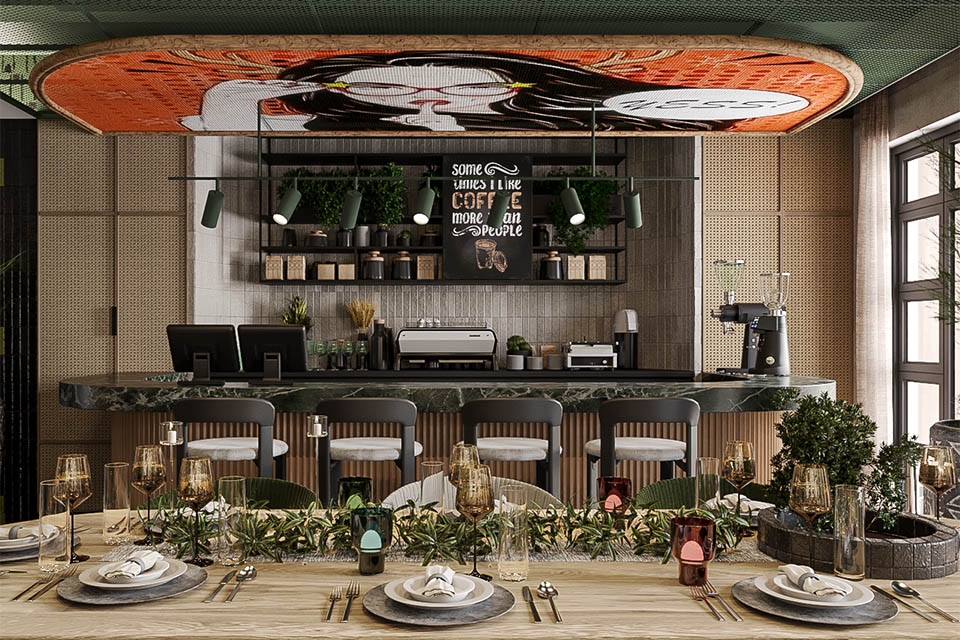
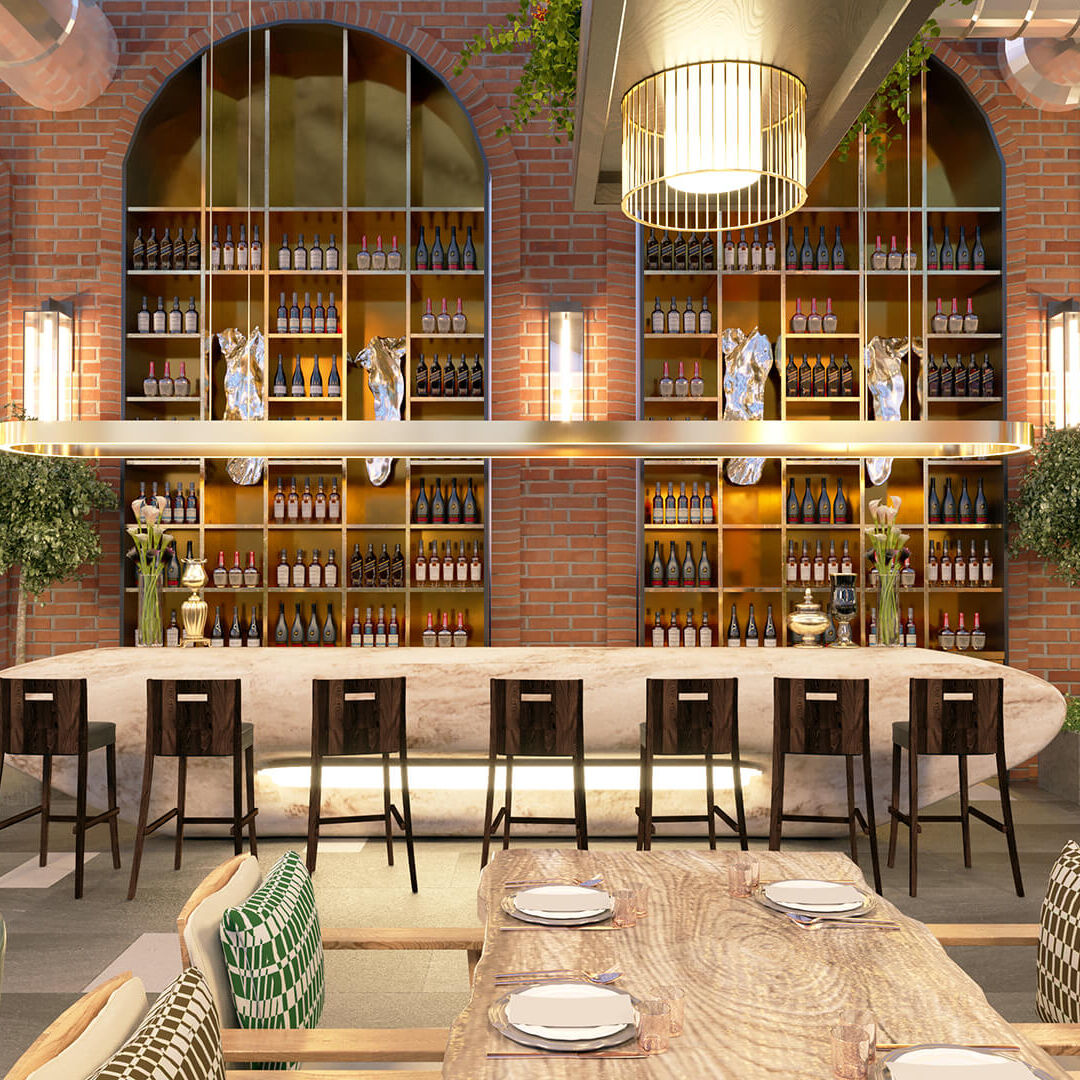
- Green Finishes: A variety of green tones are applied across different textures—dark, glossy marble for the bar top, matte, textured paint for accent walls (some featuring relief graphics of marine life), and a semi-translucent, perforated metal grid ceiling structure in a deep moss green.
- The flooring transitions between light wood planks in the main dining area and a light gray/white terrazzo-look tile in the hallway and circulation paths, with darker green marble accents used as thresholds and baseboards to define the edges of the space.
The furniture selection reinforces the design’s casual yet curated sensibility. Seating is diverse, supporting multiple usage modes:
- Upholstered Sofas and Banquettes: Featuring plush, olive green velvet or textured fabric, these pieces anchor the lounge areas and offer a higher level of comfort.
- Dining Chairs: A mixture of open-weave rattan chairs and solid, matte green metal chairs provides textural and visual contrast while maintaining the core color theme.
- Tables: Simple, square, or rectangular table tops in natural wood are paired with solid green metal bases, a repetitive element that structurally and colorimetrically connects the seating clusters.
- The deep green color acts as a strong unifying thread, linking the soft furnishings to the hard surfaces of the bar, buffet, and architectural elements. This consistent color application ensures that despite the variety of materials (wood, rattan, metal, fabric, stone), the interior maintains a cohesive visual narrative.
The lighting scheme is executed in layers to support the multi-functional requirements of the restaurant across different times of the day.
- Decorative Lighting: A series of large, woven rattan pendant lamps are centrally positioned over the main dining areas. Their organic form and porous weave create warm, diffused light and pronounced shadow patterns, adding a natural, artisan quality to the space.
- Task/Accent Lighting: Black track lighting and discreet spotlights are integrated into the ceiling grid to provide focused illumination on tables, the bar area, and key wall features. This directional lighting highlights the textures and graphic elements.
- Ambient Lighting: Recessed downlights in the white plaster sections of the ceiling provide general ambient illumination, particularly in the transit zones, balancing the more dramatic effects of the decorative fixtures.
- The presence of natural light from the extensive glazing along the exterior wall is maximized, blurring the line between the indoor dining space and the outdoor landscaping.
Art and custom graphic applications are central to the restaurant’s identity.
- Ceiling Art: A prominent feature is the oval-shaped, custom mural set into the ceiling above the bar and another over a seating area. These colorful, expressive artworks introduce a vibrant, contrasting element to the muted greens and natural tones.
- Wall Graphics: Wall surfaces feature large-scale, minimalist line drawings of natural forms (a whale, musical notes over the stage), executed in white on the textured green or concrete-look walls. This integration of art onto the architectural surface prevents the space from becoming visually heavy.
- Service Stations: The buffet area utilizes a bespoke design, featuring a central island with a green marble countertop contrasting with a white marble base and wood joinery. This area is designed for efficient, self-service flow while contributing to the aesthetic with its curvilinear form.
- Planting: The liberal use of large, tropical potted plants serves as a core architectural element, defining boundaries, softening circulation paths, and directly reinforcing the biophilic theme. The plants are housed in decorative, textured pots, many featuring geometric or tribal-inspired patterns.
The ADD Restaurant in the Intercity Hotel utilizes a structured and layered design approach across its 355 m² area. The interior design is intrinsically linked by the pervasive use of a green and natural material palette, integrating rattan, light timber, textured fabrics, and custom art installations. The effective zoning of the main dining room, bar, and intimate booths ensures the space operates efficiently as a versatile, all-day dining venue. This consistent application of a unified aesthetic provides the facility with a defined and coherent atmosphere.
PROJECT FACTS
Tashkent, Uzbekistan
355 m2
Globus Tashkent
2025
Share