

Image © Quark Studio Architects
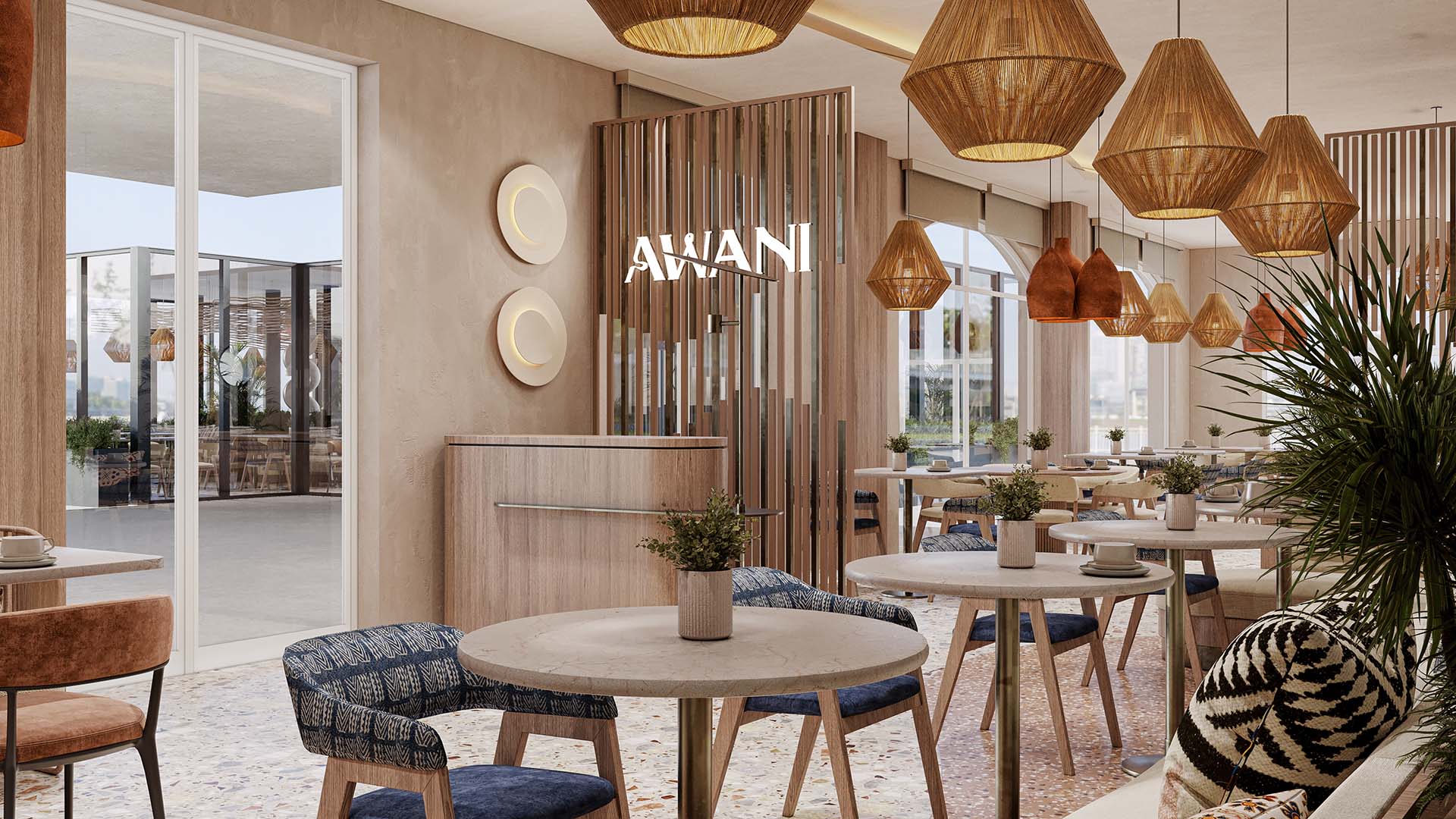
Image © Quark Studio Architects
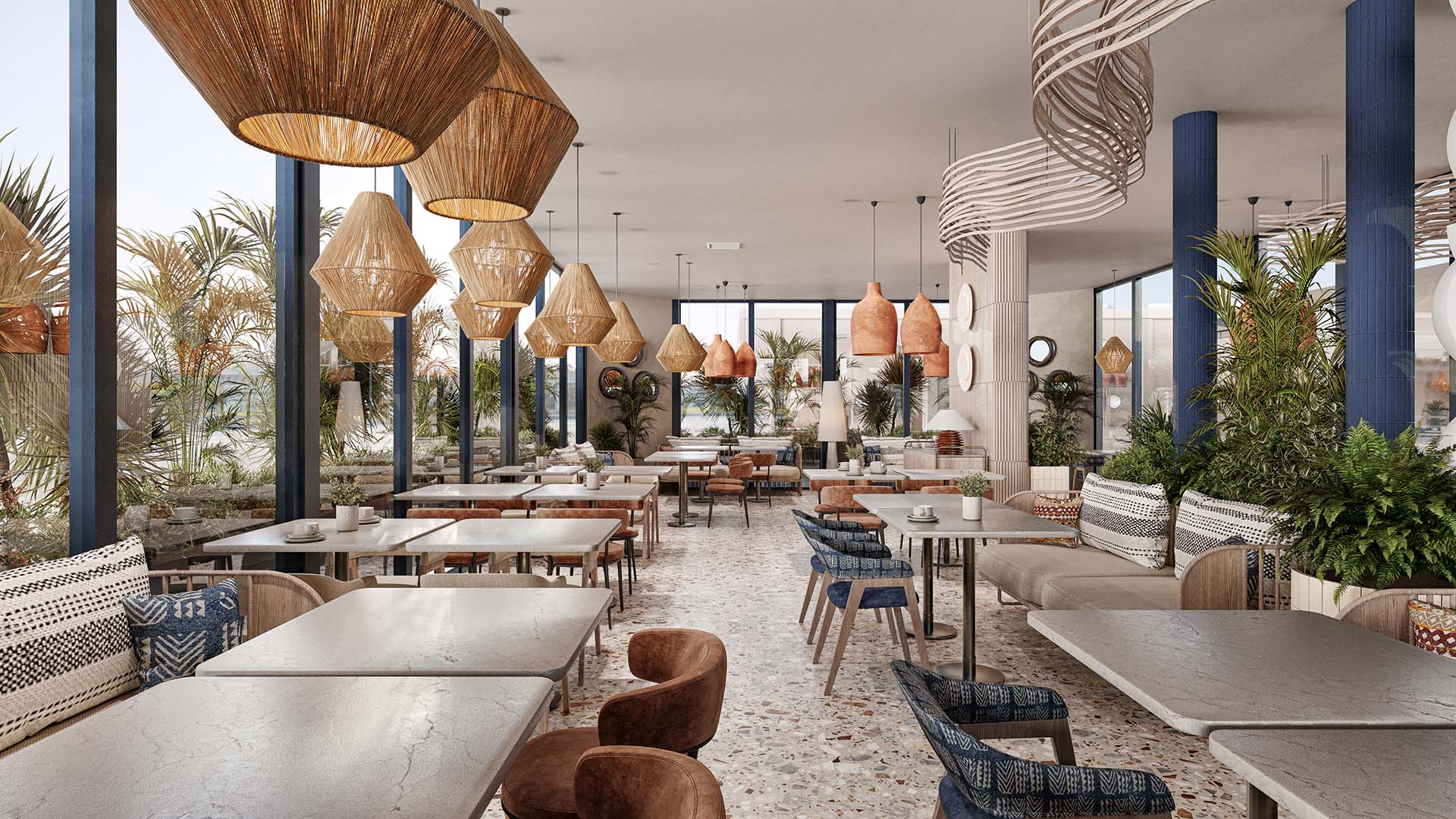
Image © Quark Studio Architects
Awani Meadows Restaurant
Dubai, UAE
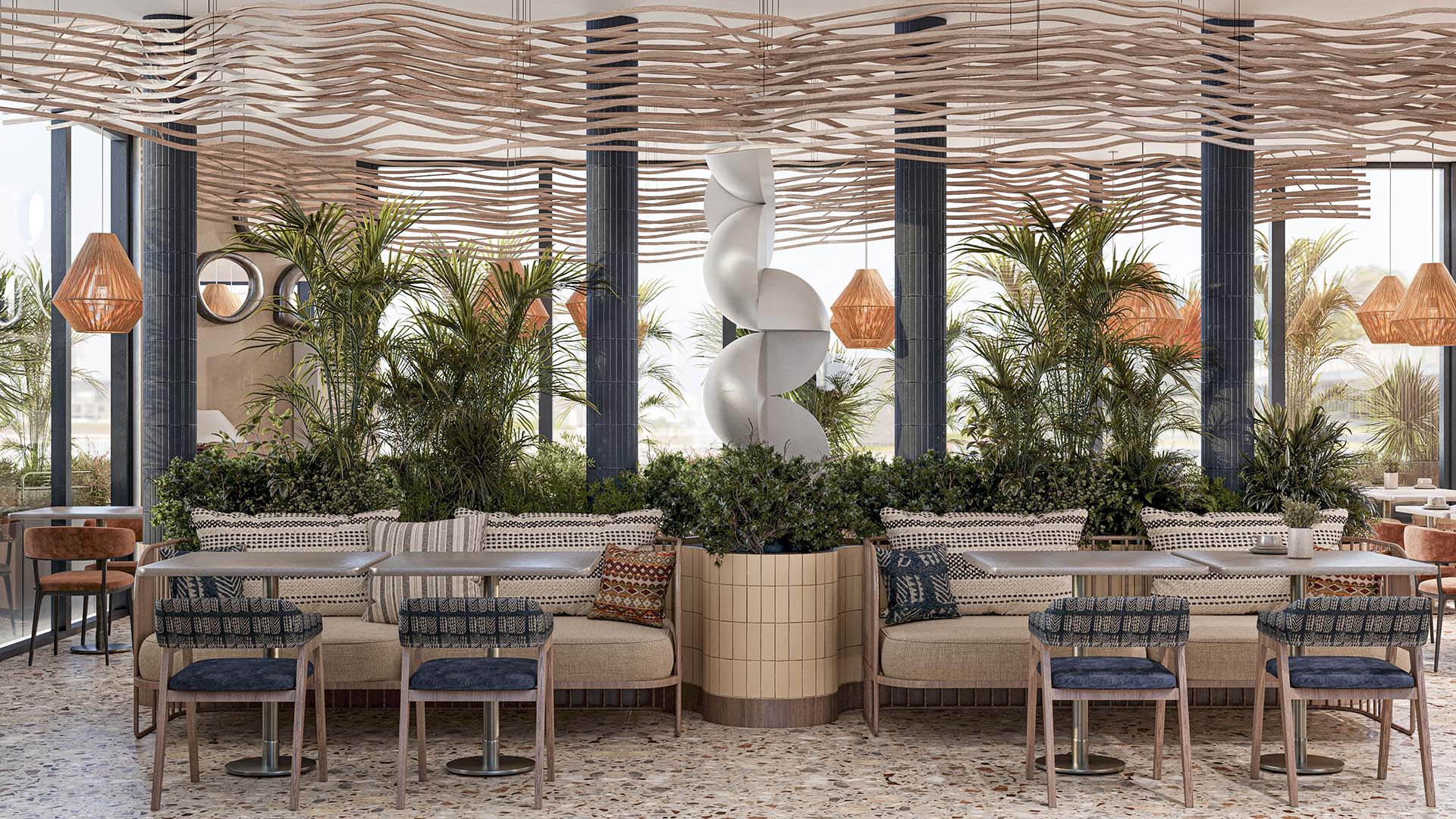
Within Dubai’s vibrant culinary landscape, Awani Meadows Restaurant offers more than just a dining experience; it presents a curated spatial narrative where the act of dining becomes an immersive experience. Spanning 440 square meters, the project meticulously integrates a professional kitchen, an inviting indoor dining hall, and an adjacent open-air terrace, each zone attentively considered to foster distinct yet interconnected atmospheres, drawing inspiration from a rich tapestry of cultural influences, resulting in an environment that is both dynamic and richly textured.
At the heart of Awani Meadows lies a deliberate strategy in the articulation of its seating arrangements, conceived as pivotal elements in shaping the social dynamics of the space.
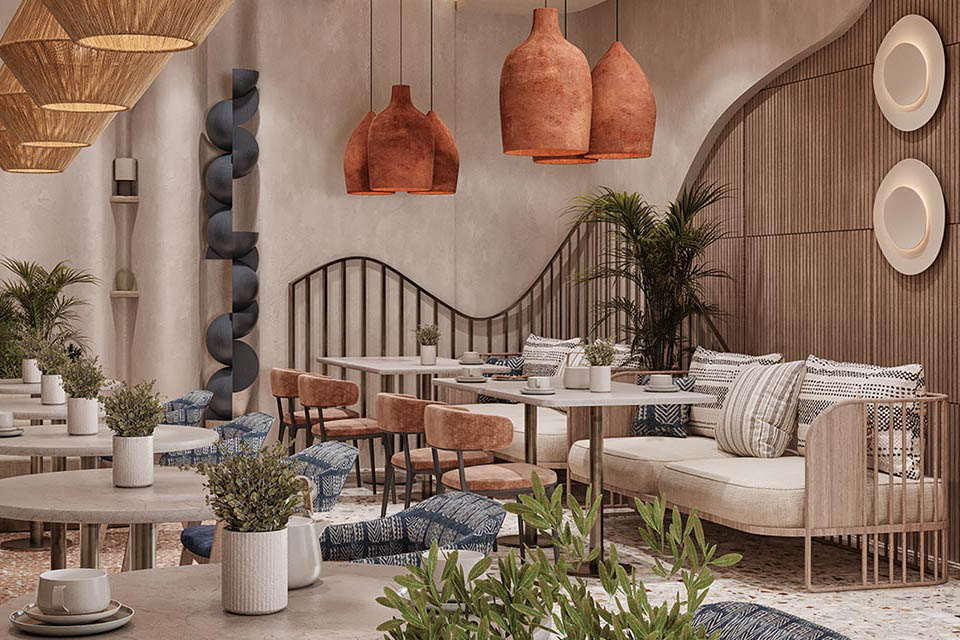
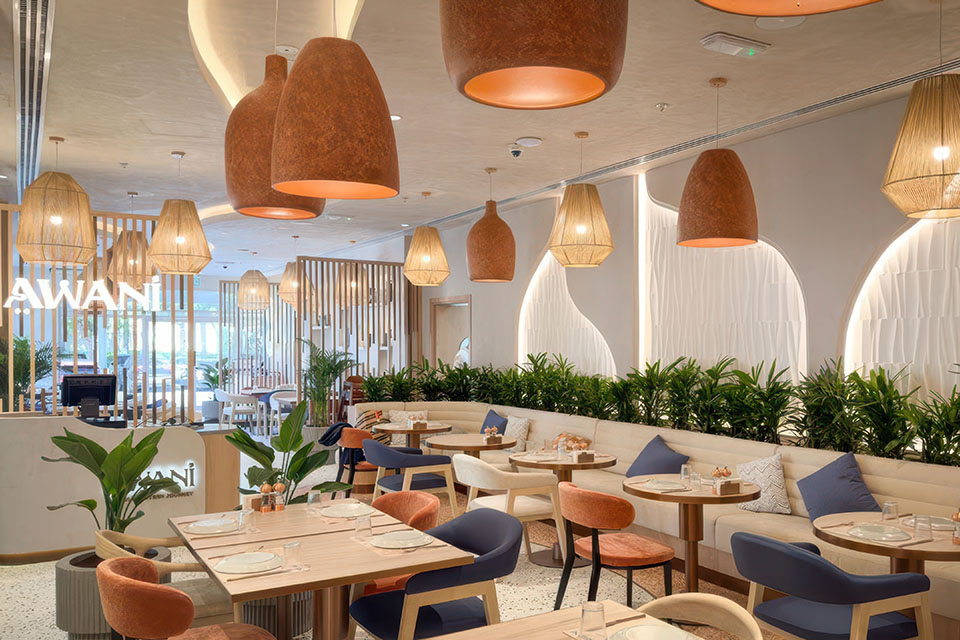
The central dining hall is not conceived as a singular, homogenous volume, but rather as a constellation of intimate zones. This departure from rigid uniformity fosters a sense of intimacy and varied spatial experiences. Clusters of smaller tables encourage casual gatherings and convivial conversations, while strategically placed larger configurations accommodate more formal dining settings.
The spatial distribution and orientation of these seating clusters are carefully considered to balance openness and intimacy, fostering a sense of connection without sacrificing individual comfort. Calibrated spacing allows for ease of movement and conversation, contributing to a relaxed yet refined ambience.
Pathways are subtly defined, guiding circulation without disrupting the pockets of intimacy. The selection of seating furniture, likely incorporating natural materials and complementary textiles, further contributes to the overall tactile and visual harmony of the space. The articulation of the seating plan becomes a key element in shaping the user experience and the overall ambience of the interior.
Transitioning to the exterior, the terrace dining space is anchored by a striking architectural gesture: a rhythmic screen of vertical wood slats. This linear element transcends mere enclosure, acting as a dynamic filter for light and views, casting ever-shifting patterns of shadow and creating a tangible sense of movement along the terrace edge. The spacing and orientation of the slats are carefully calibrated to balance enclosure with openness, offering glimpses of the surrounding context while maintaining a sense of defined space.
Juxtaposed against this linear rhythm is a sweeping curved ceiling element. This curvilinear form introduces a compelling visual counterpoint, softening the inherent linearity of the wood slats and adding a layer of architectural complexity and visual interest. The interplay between these contrasting geometric vocabularies defines the terrace’s unique character, creating a dynamic yet cohesive outdoor dining environment.
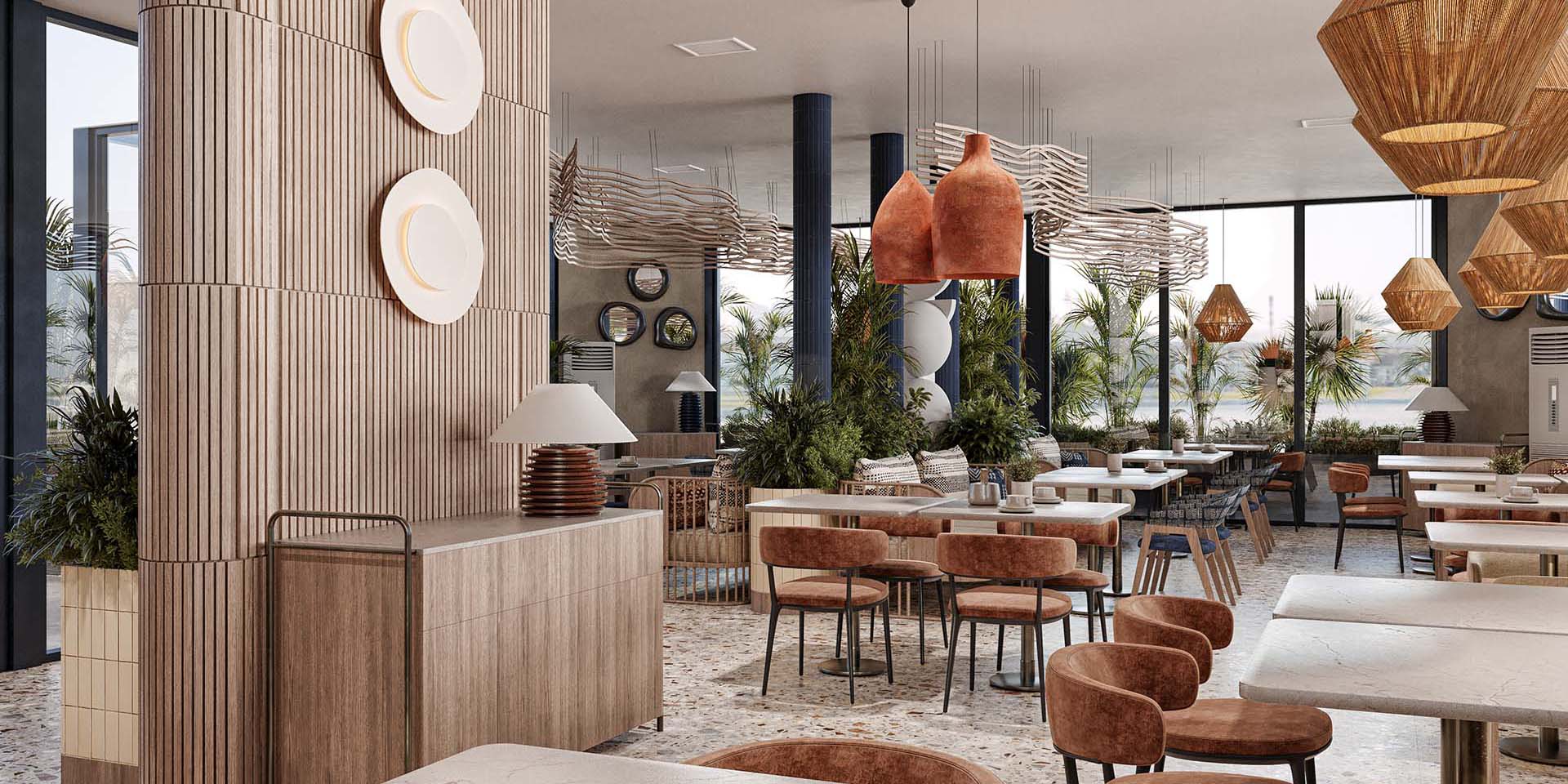
The selection and application of materials serve as a fundamental language in shaping the sensory experience of Awani Meadows. Terrazzo patterned floor ceramic tiling provides a durable and visually engaging foundation, its inherent variations adding subtle texture. Walls are predominantly finished with a decorative beige paint, offering a warm and neutral backdrop that allows other material expressions to take prominence.
Strategic interventions of plasterwork exhibiting a brick pattern introduce tactile and visual depth, adding a layer of historical resonance. The consistent use of natural oak wood, finished with a light brown varnish, throughout joinery, furniture, and potentially wall cladding, injects warmth and a sense of organic connection. This curated material palette works in concert to create an environment that is both aesthetically refined and experientially rich.
Awani Meadows Restaurant embodies a considered architectural vision that prioritises the nuanced articulation of space through the considerate application of materials, the strategic arrangement of seating, and the considered interplay of linear and curvilinear forms. The resulting environment transcends a purely functional dining space, evolving into a carefully crafted atmosphere that subtly echoes diverse cultural influences without resorting to pastiche. The architectural vision, evident in the deliberate detailing and the cohesive material narrative, invites patrons to engage with a space that is both inviting and architecturally considered, offering a distinct and memorable culinary journey.
PROJECT FACTS
Dubai, UAE
440 m2
AWJ
2024
Share
RELATED PROJECTS
Shisha Lounge
Baghdad, IQ
Awani U-Walk Restaurant
Jeddah, KSA
Yalseh Lounge
Dubai, UAE
Seafood Restaurant
Baghdad, IQ
