

Image © Quark Studio Architects
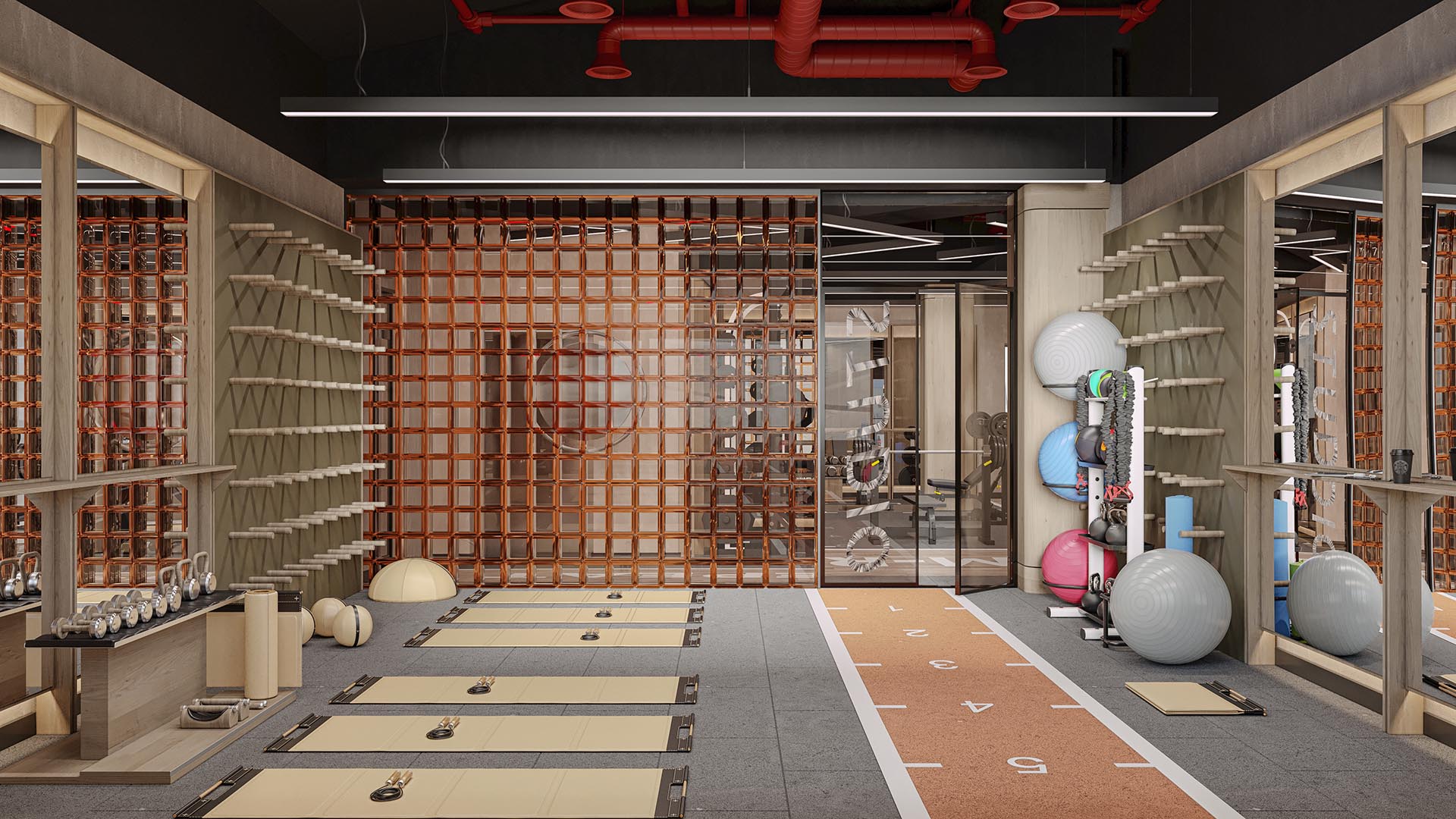
Image © Quark Studio Architects
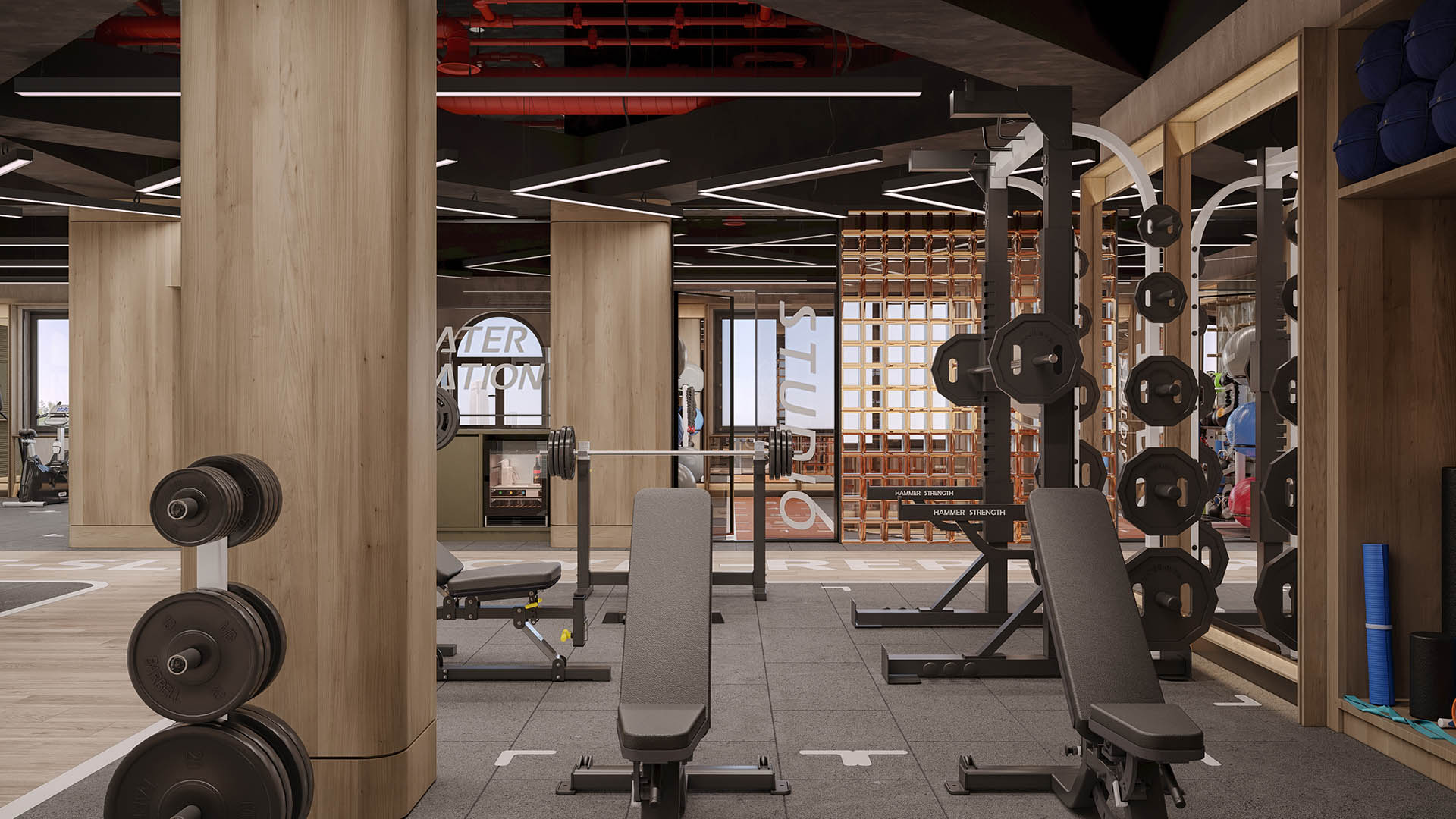
Image © Quark Studio Architects
Fitness Club in Intercity Hotel
Tashkent, UZB
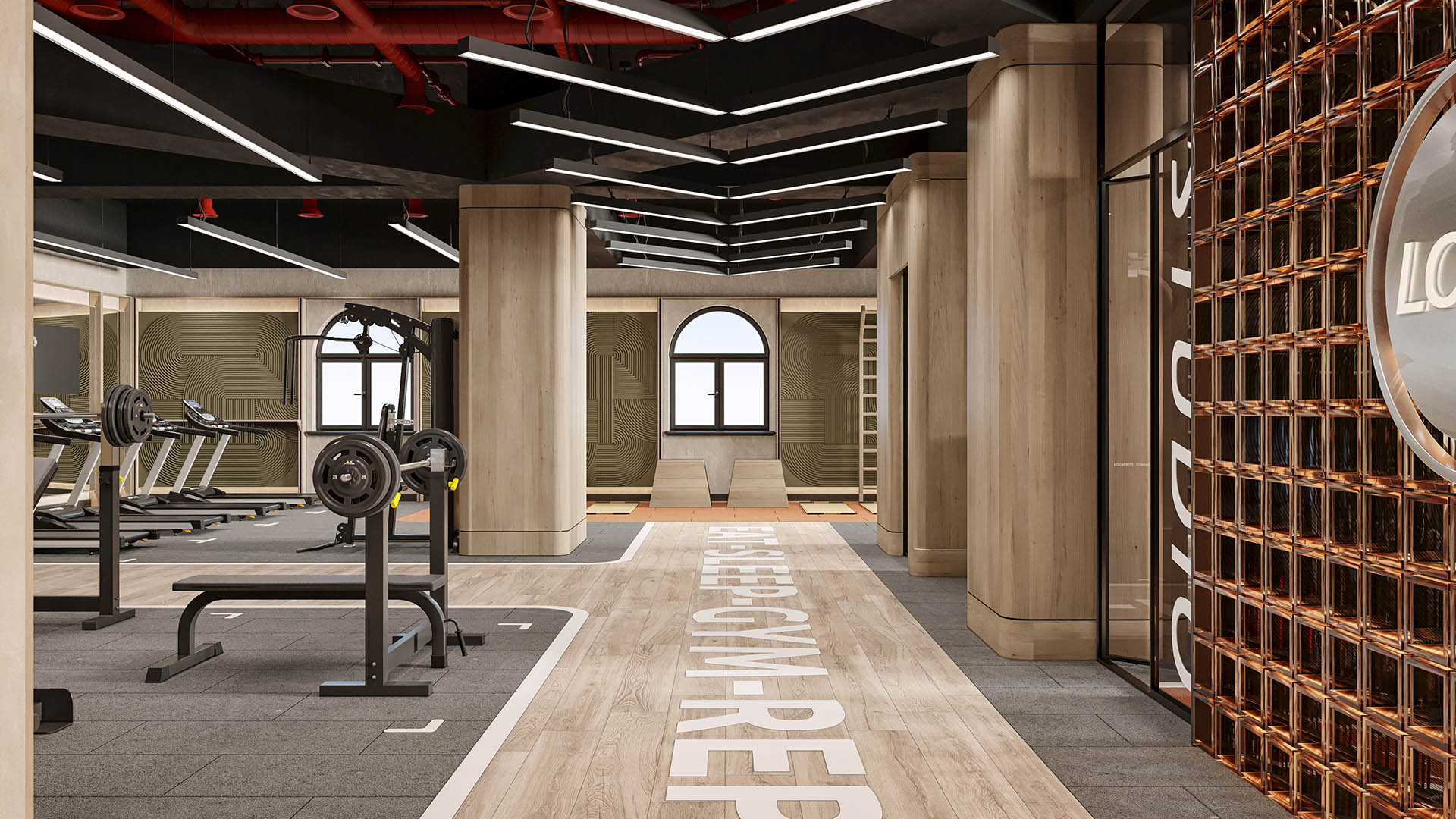
This project details the design of a 282 square meter fitness club located within the Intercity Hotel in Tashkent, Uzbekistan. The design addresses the unique challenge of integrating a dynamic, high-energy wellness space within the structure of a hospitality environment, resulting in a cohesive, contemporary, and functionally robust facility. The approach prioritizes a hybrid aesthetic that balances industrial elements with natural, warm textures, carefully orchestrating a sequence of spaces dedicated to various facets of fitness and regeneration.
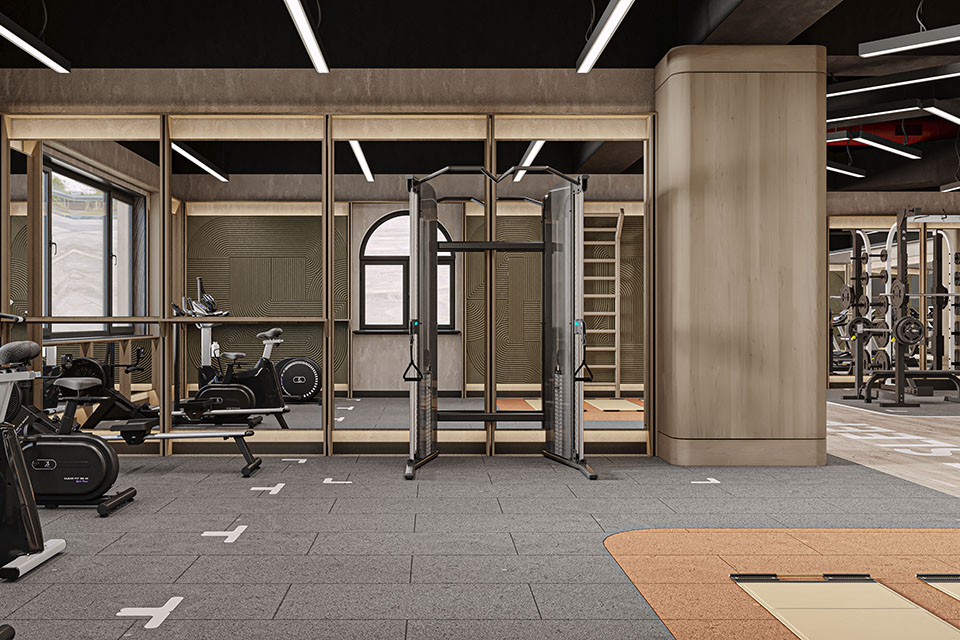
The spatial organization is defined by a clear circulation path that transitions members from the reception and service areas into the main training zones. The floor plan efficiently accommodates distinct functional areas—cardio, free weights, functional training, and a dedicated studio—while maintaining a sense of openness and visual connectivity. This strategic layout is crucial for a space of this size, maximizing the perception of depth and accessibility. The vertical dimension is emphasized by the exposed black ceiling infrastructure, a deliberate industrial aesthetic choice that contrasts with the lower, human-scale wooden and textured paneling. Arched window openings and internal glazed partitions introduce rhythmic architectural elements that subtly break the rectilinearity of the modern structure, adding a classic, almost vault-like counterpoint to the contemporary design language.
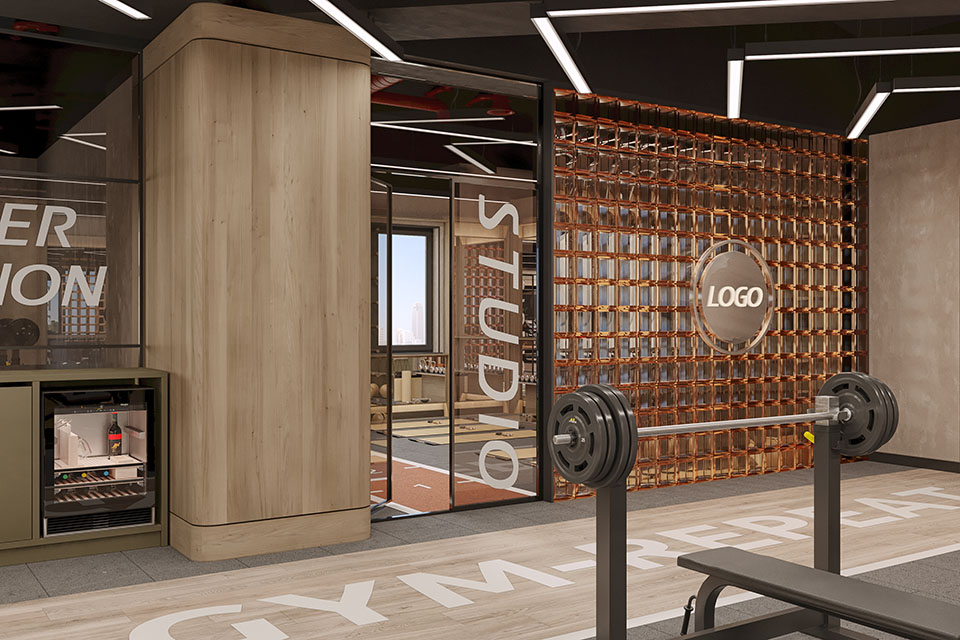
The material palette is a sophisticated interplay of contrasting textures designed to stimulate and ground the user. The primary materials include natural light-toned wood cladding—applied to structural columns, wall panels, and the reception desk—and dark, textured rubber and composite flooring. This dual application of warm wood and utilitarian flooring material serves a functional purpose, denoting zones of activity, while simultaneously providing acoustic dampening and impact resistance. The industrial theme is reinforced by the presence of exposed red mechanical ducts across the ceiling, which are deliberately celebrated as design elements. A striking feature is the extensive use of textured glass blocks with an amber/coppery hue, which form translucent partitioning screens. This material choice allows for light diffusion while maintaining a visual separation between spaces, creating an ever-changing sense of enclosure and privacy.
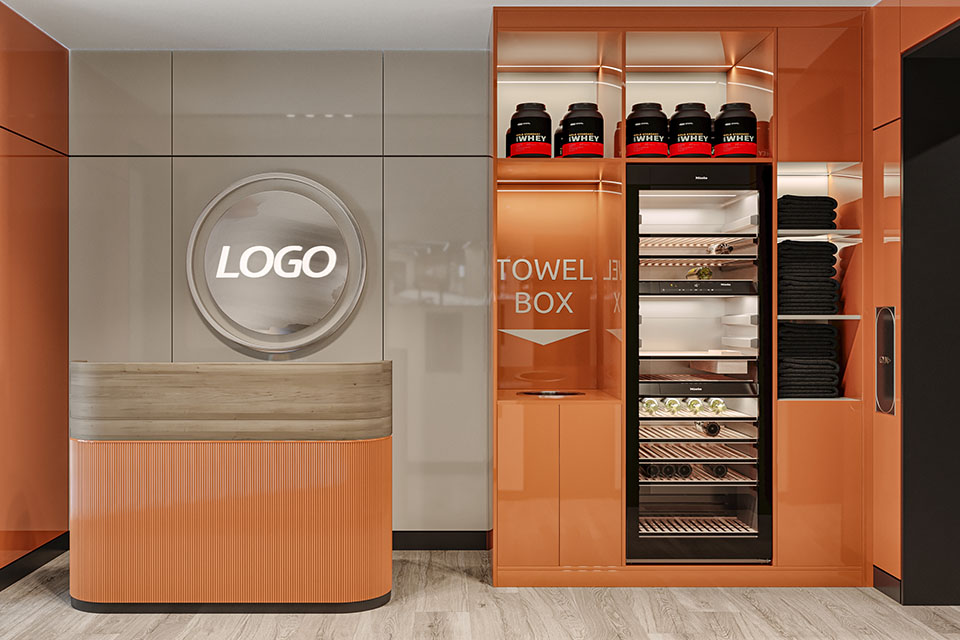
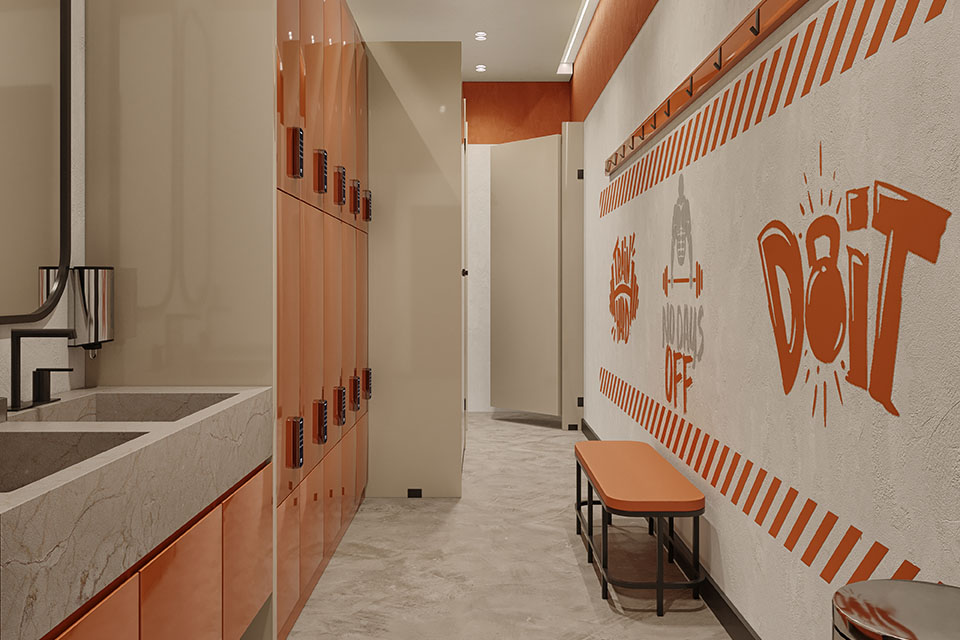
The interior design strategy seeks to maintain visual coherence across all functional zones. The bespoke and integrated furniture pieces strictly adhere to the project’s established palette, most notably through the use of an electrifying orange-ochre tone that functions as the accent color. This color is used for the high-gloss cabinetry at the reception area, the sleek, functional lockers in the changing rooms, and the accent bench and graphic wall markings. The repetition of this color acts as a strong connecting motif throughout the club, providing pops of energy against the dominant neutral background of wood and concrete-toned surfaces. The free weights and cardio equipment are selected for both performance and aesthetic integration, featuring minimalist frames that do not visually overwhelm the space. The inclusion of bespoke storage, such as the open shelving and the ‘Towel Box’ feature, promotes order and streamlines the user experience.
The lighting design is a critical component that defines the atmosphere and functionality of the club. It employs a multi-layered approach that eschews conventional, flat illumination in favor of dynamic, linear patterns. Suspended LED linear fixtures create a dramatic V-shaped, directional geometry on the dark ceiling, which serves as a powerful graphic element. This angular illumination guides the eye and emphasizes the space’s depth. Complementary ambient lighting is provided by hidden cove lighting and strategically placed spotlights to highlight textured walls and key architectural features. In the locker rooms, uniform, bright overhead lighting ensures practicality, while the main gym floor benefits from a controlled, motivational glow that supports intense activity without harsh glare. The large windows also allow ample natural light to penetrate the main training area, connecting the interior activity with the exterior environment and mitigating the heavy industrial ceiling treatment.
Attention to detail extends to the subtle graphic and tactile interventions. Wall panels near the functional training area feature abstract, wavy relief patterns that introduce a kinetic energy and softness to the wooden surfaces. In the changing rooms, large-scale, bold, orange-ochre graphics with motivational messages are integrated directly onto the wall, serving as both decoration and an extension of the brand identity. The mirrored surfaces, particularly those near the equipment and studio entrance, are used not merely for reflection but as architectural planes that multiply the perceived volume and light within the interior. Wayfinding and branding are subtly integrated, such as the white floor graphics, including the gym mantra and movement markers, ensuring the space remains intuitive and professional.
The Intercity Hotel Fitness Club, spanning 282 m² in Tashkent, represents a functional integration of a specialized wellness facility within a hospitality context. The design juxtaposes the industrial elements—such as the exposed ceiling infrastructure and dark finishes—with the warm materiality of natural wood and the visual activation provided by an orange-ochre accent. Through meticulous detailing, strategic lighting, and the precise placement of equipment, the facility achieves a high degree of spatial and aesthetic coherence. This approach resolves the practical requirements of a contemporary gym while establishing a distinct and architecturally resolved presence within the Intercity Hotel complex.
PROJECT FACTS
Tashkent, Uzbekistan
282 m2
Globus Tashkent
2025
Share
RELATED PROJECTS
LUX* Me Spa
Bodrum, TR

Deva Maria Hospital Extension Building
Burgas, BG
Kahramanmaraş HG Hospital
Kahramanmaraş, TR
